
GUIDES
The transfer market is where you buy, sell or loan players. The fee is the part everyone looks at. The wage is the part that dismisses managers. Read the forecast before you bid.
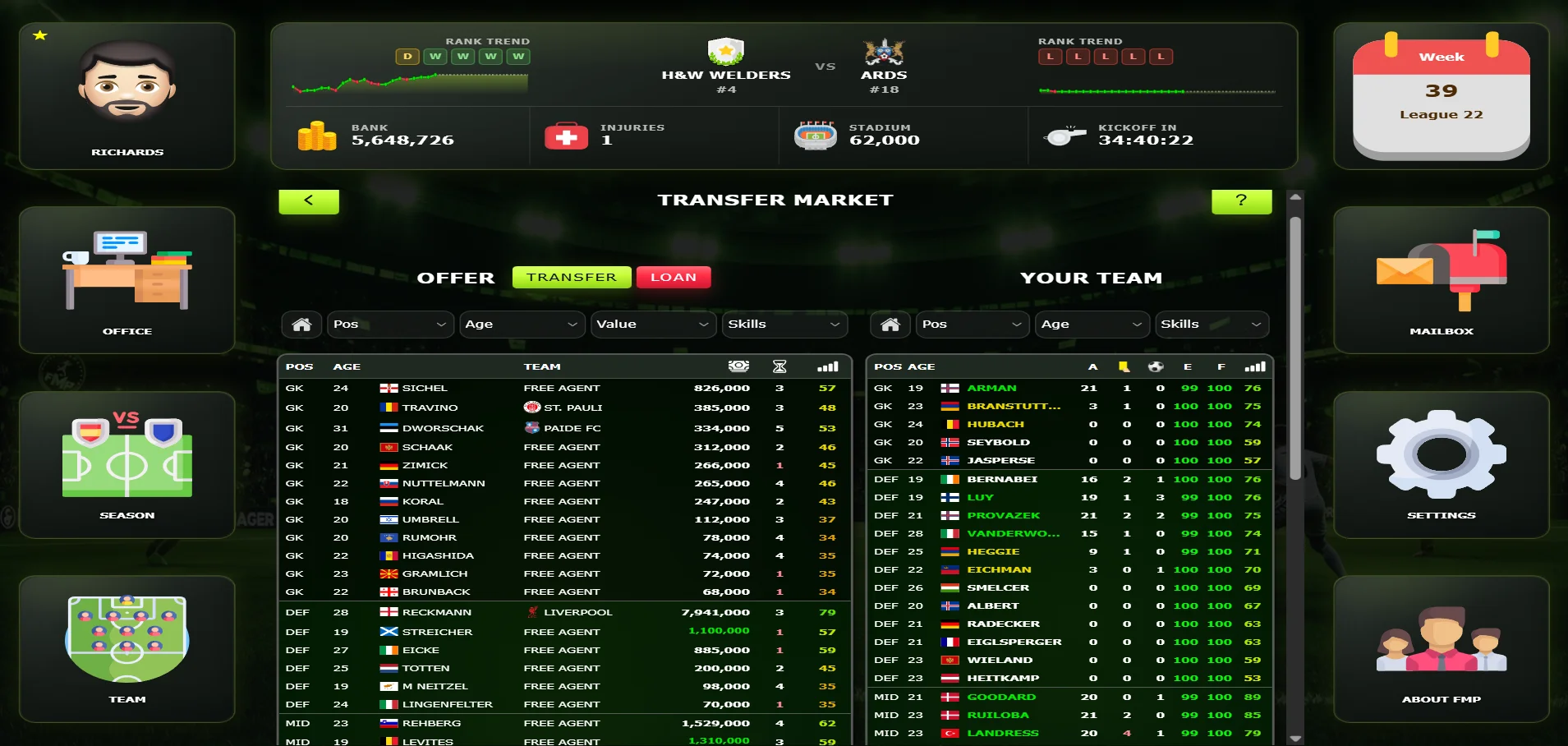
You can list your own player. After the deal, the squad must still have at least 17 players available. A player who is already on loan cannot be sold or loaned out again. Seventeen is a floor, not a target. Suspensions and injuries still have to leave you with a goalkeeper and seven outfield players or the match is a 0:3 green-table loss.
You can buy, or you can loan for 2 to 6 weeks. The fee or loan fee has to sit near market value: not too low, and not more than about double. The offer includes a wage and a contract length of 1 to 5 years. If the player rejects the wage or the length, the deal fails. There is no second hidden negotiation on that bid.
Wage demands rise quickly with strength. A transfer is the fee once and the wage every matchday, Wednesday, Friday and Sunday, until the contract ends or you sell. Check finances before you accept. If the wage doesn’t fit, don’t plan to “sort it out later”. Sell instead, or walk away.
Renegotiating someone you already own is a different screen: contracts. Both screens can sink the same account. The dismissal line is −3,000,000, with a warning near −500,000. Starting budgets are about 4,500,000, 3,000,000 and 1,500,000 by division, on club economy.
Sponsors and the stadium pay you every home week. A new forward does not. Sign the empty sponsor slots, look at ticket income, then open the market. Sponsors reset at the start of every season. Skipping that week and buying first is the classic way to go bust.
Training still matters after the signing. A player who never plays loses 0.001 experience per matchday and becomes a worse asset. Rotate, or do not buy the extra body. Camps can lift fitness for the whole healthy squad and are priced on training camp. They are not a substitute for a bad wage.